






If you rely on a pumped shower, you’ll know how frustrating it is when the pressure drops off or the water cuts out altogether. I’ve been into plenty of homes where people thought they had a boiler problem, only to find the shower pump quietly struggling in the airing cupboard. Knowing the early signs can save you inconvenience and money. If you’re already looking into shower pump repairs, here’s what to watch out for before things get worse.
A healthy shower pump should kick in smoothly when you turn the shower on, run consistently and give you strong, steady pressure. When it doesn’t, it usually gives a few warning signs first.
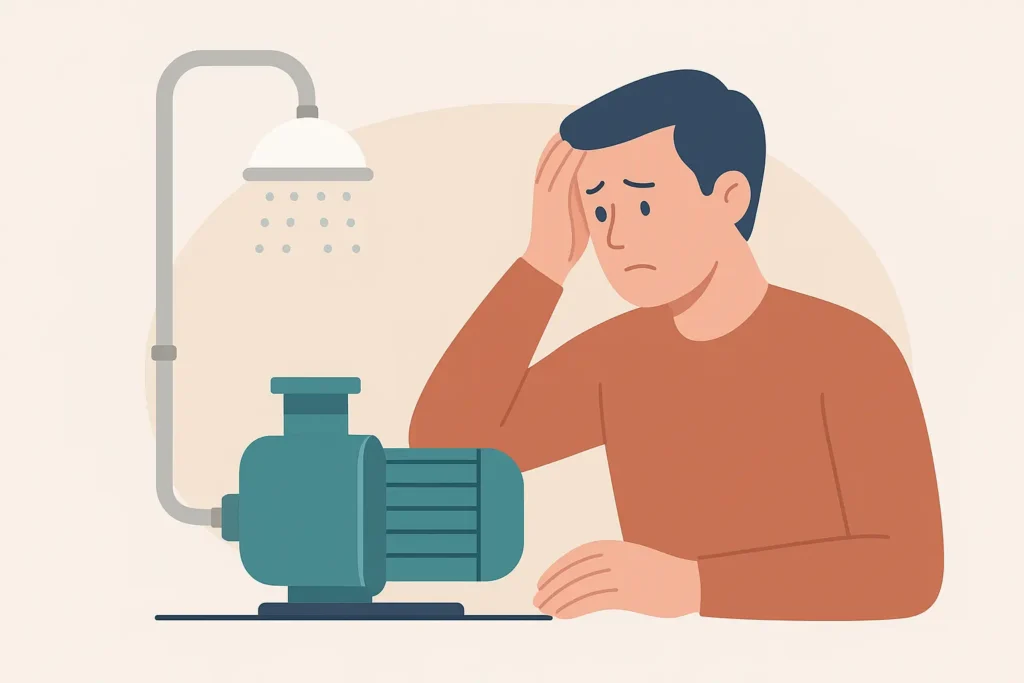
Why a Healthy Shower Pump Matters
A shower pump is there to boost water flow, usually in homes with gravity-fed systems and a cold water tank in the loft. Without it, you’re left with a disappointing trickle. When it’s working properly, you should get a consistent flow and decent spray pattern from your shower head.
When it starts failing, the pressure becomes unreliable and other issues can follow. In some cases, running a faulty pump can even damage pipework or lead to leaks. Catching problems early gives you more options and often keeps costs down.
Sign 1: Weak or Fluctuating Water Pressure
This is by far the most common complaint. You turn the shower on and it’s either noticeably weaker than it used to be or it pulses hot and cold with changing pressure.
Before blaming the pump, it’s worth checking a few basics:
- Is the shower head blocked with limescale?
- Has the cold water tank in the loft run low?
- Are there any obvious leaks?
If those all look fine, the pump itself may be worn internally. Impellers can clog or seals can deteriorate over time, especially in hard water areas. Around High Wycombe and Amersham, limescale is something we deal with regularly.
Sign 2: Strange Noises from the Pump
A shower pump should make a smooth humming noise when it runs. If you start hearing grinding, rattling, screeching or excessive vibration from the airing cupboard, that’s a red flag.
Common causes include worn bearings, air trapped in the system or loose pipework causing the pump to vibrate against joists or floorboards. I’ve attended call-outs in Chesham where the customer thought “the boiler was about to explode” and it turned out to be air locking in the pump.
Ignoring unusual noises rarely makes them go away. In my experience, they usually get louder and eventually lead to full pump failure.
Sign 3: Pump Frequently Turns On and Off
If your pump keeps cutting in and out while the shower is running, something’s not right. It should run continuously for the duration of the shower.
This issue can point to:
- Faulty flow switches
- Air in the system
- Electrical issues within the pump
- Low water supply from the tank
Short cycling puts extra strain on the motor and can shorten the lifespan of the unit. I often explain it to customers like stop start driving in traffic compared to a steady motorway run. The constant starting and stopping causes more wear.
Sign 4: No Water Flow Despite Pump Running
This one catches people out. You turn the shower on, you can clearly hear the pump running, but little or no water comes through.
That can mean the pump is spinning but not actually moving water. Internal components may have failed or the pump may have seized partially. In some cases, debris from the tank can block the inlet filters.
If this happens, it’s best to switch the pump off and get it checked. Letting it run dry can cause further damage.
Sign 5: Leaks or Visible Wear
Any sign of water around the pump is worth investigating. Even a small drip can eventually cause damage to floorboards and ceilings below.
Look out for:
- Water pooling under the pump
- Rust or corrosion on connections
- Cracked plastic housings
- Damp patches around the airing cupboard
I’ve seen pumps that have been quietly leaking for months, only discovered after a brown stain appears in the ceiling downstairs. Landlords especially should keep an eye on this during routine inspections.
Repair vs Replacement: What’s the Right Choice?
This is the question I get most: should I fix it or replace it?
If the pump is relatively new and the issue is minor, such as a blocked filter or an air lock, a repair is usually straightforward. Faulty electrical components can sometimes be replaced without changing the whole unit.
However, if the pump is over eight to ten years old and showing multiple symptoms like noise, poor pressure and leaks, replacement is often the more sensible long term option. Newer pumps are generally quieter and more efficient.
It also depends on how the system was originally installed. In some older properties around Amersham and Chesham, we still find pumps fitted without proper isolation valves or with undersized pipework. In those cases, upgrading part of the setup can prevent repeat problems.
When to Call a Professional Plumber
Basic checks like cleaning a shower head are fine to do yourself. But when it comes to dismantling pumps or dealing with electrics and tanks in the loft, it’s best left to someone qualified.
A plumber can:
- Test water flow and pressure properly
- Check electrical safety
- Inspect the cold water tank and pipework
- Advise honestly on repair versus replacement
If you’re based in High Wycombe, Amersham or Chesham, it’s worth getting it looked at sooner rather than later, especially if the pump is used daily by a family. A complete failure on a busy weekday morning is never ideal.
Conclusion: Don’t Ignore the Warning Signs
Shower pumps rarely fail without a bit of warning. Weak pressure, odd noises, cycling on and off or visible leaks are all signs that something isn’t right. Acting early can often mean a simple repair rather than an emergency replacement.
If you’re unsure what state your pump is in or you’d like an honest opinion, it’s worth having it checked by a professional. The team at Chiltern Plumbing and Heating regularly help homeowners and landlords diagnose and resolve shower pump issues across the local area.
Need expert help? Contact our team today and we’ll be happy to take a look and talk you through the options.