






A gas safety certificate is a written record showing that a Gas Safe registered engineer has checked every gas appliance, pipe and flue in a property and confirmed they’re safe to use. If you’re a landlord in England, Scotland or Wales, you’re legally required to have one for any rented property with gas appliances, renewed every 12 months. If you’re a homeowner, it isn’t a legal requirement, but the same annual check is still the simplest way to catch a problem before it becomes dangerous or expensive.
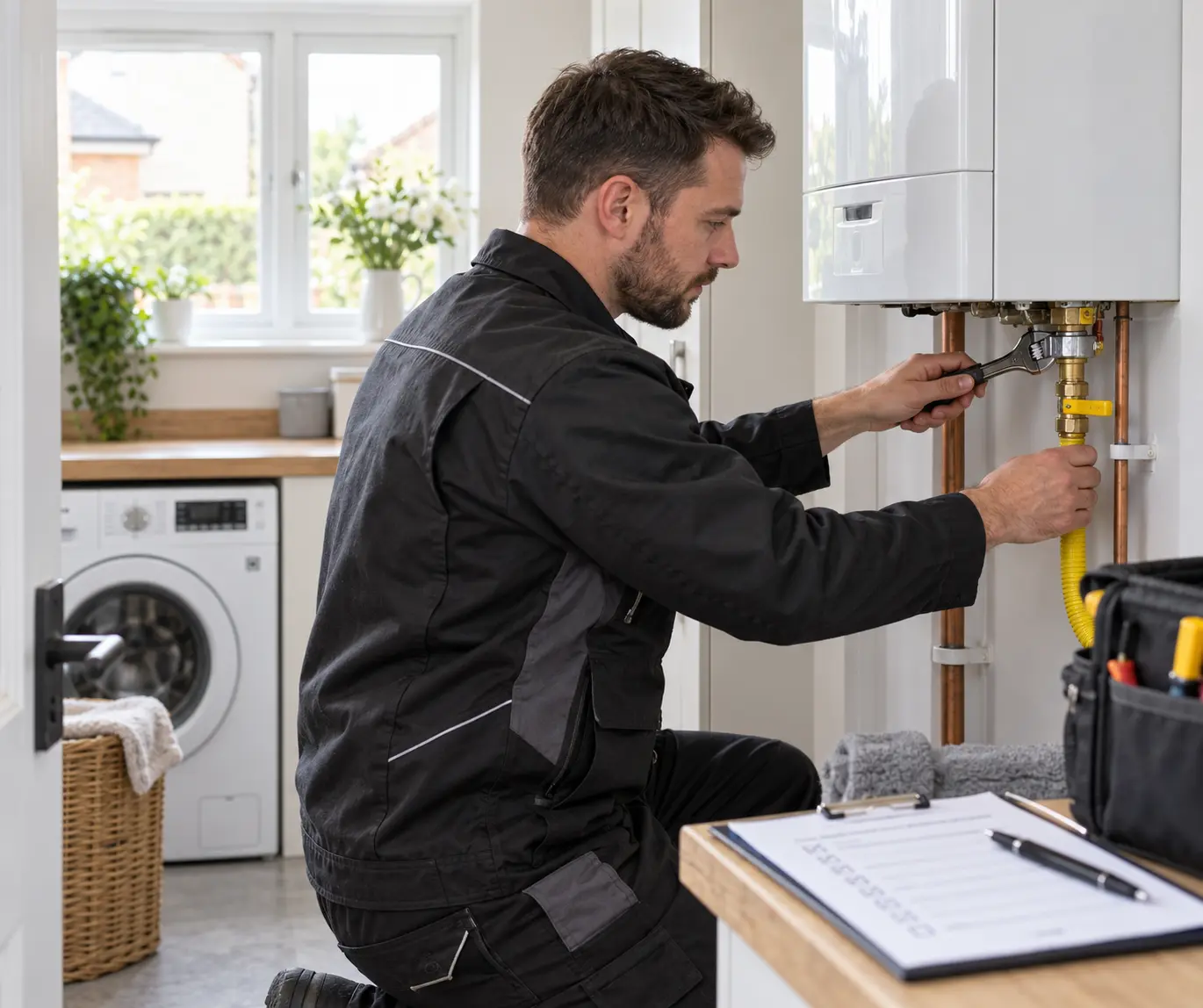
What is a gas safety certificate, exactly?
A gas safety certificate, sometimes called a landlord gas safety certificate, is officially known as a Landlord Gas Safety Record (and still widely referred to by its older name, a CP12). It’s the paperwork an engineer hands over after inspecting a property’s gas installations. It lists every appliance checked, confirms whether each one is safe, and is dated and signed by the engineer who carried it out.
It isn’t a certificate you apply for or buy. It’s the outcome of an inspection, and it’s only valid if a Gas Safe registered engineer carried out the check.
Do landlords need a gas safety certificate by law?
Yes. Under the Gas Safety (Installation and Use) Regulations 1998, landlords in the UK have a legal duty to have every gas appliance and flue they own in a rented property checked annually by a Gas Safe registered engineer. This applies whether it’s a single let, a house share, or a block with communal gas appliances tenants use.
The duty sits with the landlord, not the tenant, and it can’t be passed off to a letting agent informally. If you use a managing agent, it’s worth confirming in writing whose job it is to book the check, because the legal responsibility still traces back to you as the property owner.
What does a gas safety check actually cover?
A gas safety check looks at every gas appliance, pipe and flue the landlord provides for the tenant’s use, including:
- Boilers and central heating systems
- Gas fires and gas fireplaces
- Gas cookers and hobs supplied with the property
- Water heaters
- Flues and chimneys connected to gas appliances
- Any gas pipework the landlord is responsible for
If a tenant brings their own gas appliance (a cooker they’ve bought themselves, for example), the landlord isn’t responsible for checking the appliance itself, but is still responsible for the pipework and connection feeding it.
How often do you need a gas safety certificate?
Once a year. The check needs to happen within 12 months of a new appliance being installed, and every 12 months after that. There’s a little flexibility built in: an engineer can carry out the check up to two months before the deadline (from 10 months onward) without losing the original renewal date, which makes it easier to line up with a boiler service or avoid a tenancy changeover.
What has to happen once the check is done?
Once the engineer has carried out the check and issued the record, three things follow:
- Keep the record. Landlords need to hold onto gas safety records for at least two years.
- Give existing tenants a copy within 28 days. Current tenants are legally entitled to see the result of the check, not just be told it happened.
- Give new tenants a copy before they move in. For a brand-new tenancy, the most recent gas safety record has to be handed over before the tenant takes up residence, not sent on afterwards.
Skipping any of these steps, not just skipping the check itself, can put a landlord in breach of their legal obligations.
Do homeowners need a gas safety certificate too?
Not by law. The legal requirement applies to landlords, not to people living in their own home. That said, HSE and Gas Safe Register both recommend an annual safety check for any home with gas appliances regardless of who owns it, since the risks a check catches (carbon monoxide leaks, faulty flues, worn seals) don’t care whether the property is rented or owner-occupied.
If you own and live in your own home, an annual boiler service that includes a safety check covers similar ground without needing the formal landlord paperwork.
What happens if a landlord doesn’t have a valid gas safety certificate?
Not having a valid, up-to-date gas safety certificate is a breach of the Gas Safety (Installation and Use) Regulations 1998, and it’s enforced by the Health and Safety Executive. Beyond the legal risk, an expired or missing certificate can also cause practical problems, including issues with landlord insurance and complications at the start or end of a tenancy. For the full detail on enforcement, HSE’s own guidance for landlords is the definitive source.
Common questions about gas safety certificates
Is a gas safety certificate the same as a CP12?
Yes. CP12 was the old form number, and it’s stuck as the everyday name even though the official term is now a Landlord Gas Safety Record. If a tenant or engineer mentions a CP12, they mean the same document as a gas safety certificate.
How much does a gas safety certificate cost?
It depends on the property, so it’s worth getting a quote for your specific address rather than going by a general figure. Get in touch with Chiltern Plumbing & Heating and we’ll give you a price.
Can a gas safety check be done alongside a boiler service?
Usually, yes, and it’s often the most efficient way to do it. Ask when you book so both can be carried out in the same visit.
Who can legally carry out a gas safety check?
Only a Gas Safe registered engineer. You can check any engineer’s registration on the Gas Safe Register website before they come out, and it’s worth doing if you haven’t used them before.
Book a gas safety check
Whether it’s your first gas safety certificate for a new let or your annual renewal is coming up, our gas safety certificate service covers the full check, the paperwork, and straightforward advice if anything needs attention. Get in touch to book a date that works around your tenancy.