






If you’re renovating in Aylesbury or planning an upgrade, underfloor heating often comes up early in the conversation. We’re fitting more of it than ever, especially in kitchen extensions, open-plan ground floors and bathroom refits. Once you’ve walked barefoot across a warm floor on a cold Buckinghamshire morning, it’s hard to go back to radiators.
In this guide, I’ll walk you through the different types of systems, the benefits, what sort of homes they suit and what actually happens during underfloor heating installation in Aylesbury. These are the same conversations we have day in, day out with homeowners who want to get it right first time.
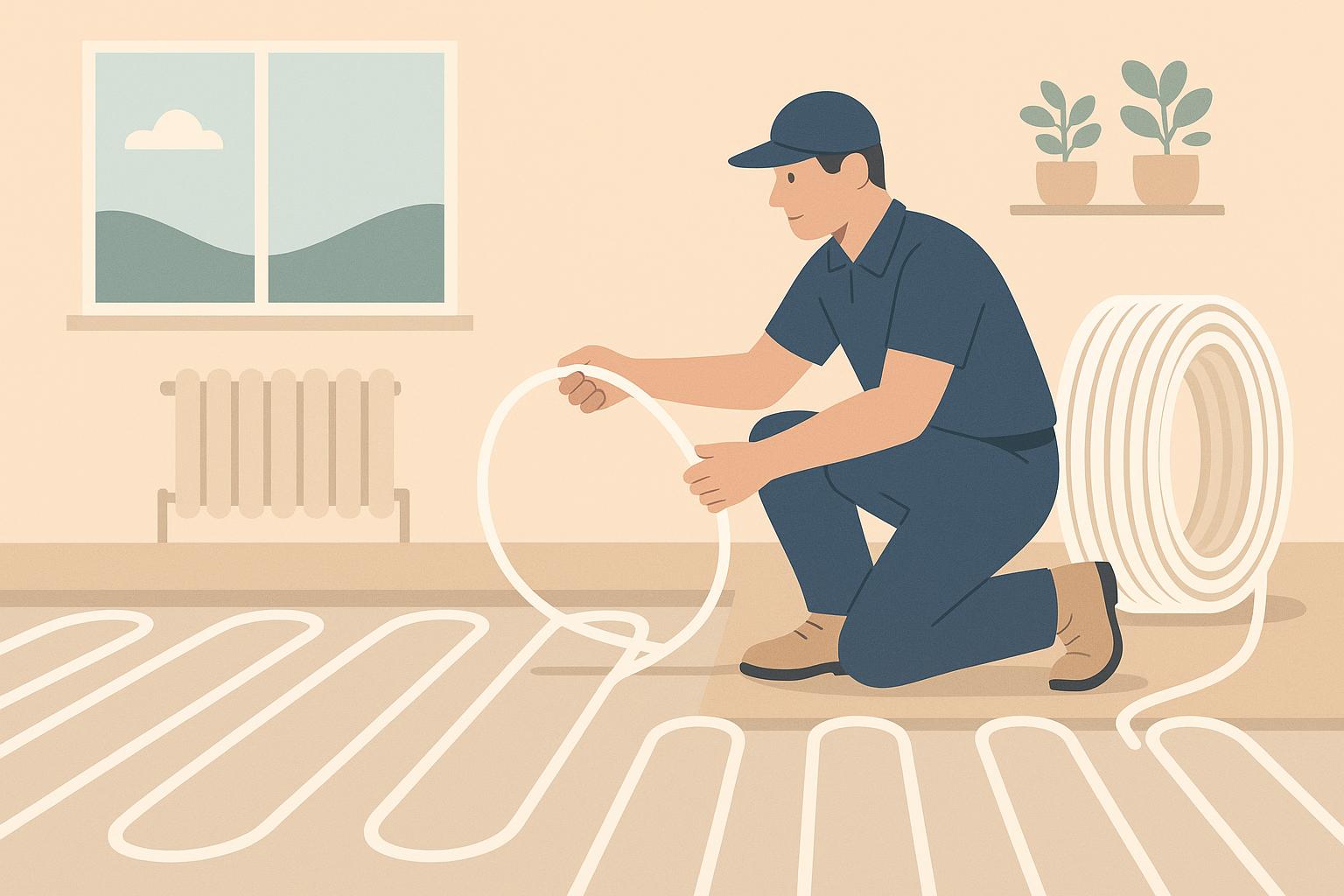
Types of Underfloor Heating
Wet (Water-Based) Systems
Wet underfloor heating uses a network of pipes laid beneath the floor. Warm water from your boiler or heat pump circulates through the pipes, heating the room evenly from the ground up.
This is the most common choice for full renovations and new builds. It works particularly well across larger areas like kitchen diners in Aylesbury’s newer estates or big open-plan ground floors in village properties around the Vale.
The key points with wet systems:
- Lower running temperatures than radiators
- Works efficiently with condensing boilers and heat pumps
- Ideal for larger areas or whole floors
- Slightly more involved install, especially if retrofitting
If you’re already lifting floors or pouring a new screed, it makes a lot of sense. We’re often asked whether existing boilers can handle it. In most cases, yes, but it needs proper design rather than guesswork.
Electric Systems
Electric underfloor heating uses heated cables or mats beneath the floor finish. It’s thinner and generally quicker to install.
This tends to be popular in bathrooms, en-suites and smaller areas where running pipework would be overkill. For upstairs bathrooms in older Aylesbury terraces, for example, electric systems can avoid having to lift ceilings below.
Main benefits:
- Quicker installation
- Minimal floor height build-up
- Good for single rooms
- Straightforward controls
Running costs can be higher than wet systems, so we usually talk through how often the room will be used and whether it’s a comfort upgrade or primary heat source.
Benefits of Underfloor Heating
People often start looking at UFH because they want to free up wall space. That’s certainly part of it, but the benefits go further than that.
- Even heat across the whole room
- No cold spots near windows
- Lower flow temperatures which can improve efficiency
- More flexibility with furniture placement
- Less visible heating hardware
One thing I always mention is comfort. Radiators heat the air around them first. Underfloor heating warms the entire floor surface, which means the heat rises gently and evenly. You notice the difference, particularly in large tiled spaces.
It also pairs well with modern insulation standards. Many of the homes we work on in and around Aylesbury have decent insulation levels, making them well suited for lower temperature heating systems.
Is Underfloor Heating Right for Your Home?
Not every property is the same, and suitability depends on a few practical factors.
Floor Construction
If you’ve got a solid concrete slab, a wet system is usually straightforward during renovation. Timber suspended floors need a slightly different approach, often with spreader plates between joists.
We always check floor heights. In some older properties around the outskirts of Aylesbury, ceiling heights aren’t generous. There are low-profile solutions, but they need planning.
Heat Loss and Insulation
Before installing any system, we calculate heat loss properly. Big glazed extensions, bi-fold doors and older cavities all influence the design. Underfloor heating works best when the room holds onto the heat.
Floor Finish
Tiles and stone conduct heat brilliantly. Engineered wood also works well if it’s rated for UFH. Thick carpet with heavy underlay can reduce efficiency, and that’s something we flag early to avoid disappointment later.
If you’re unsure, this is where experienced UFH installers in Bucks really make a difference. Design and specification are just as important as the pipework itself.
The Installation Process
Underfloor heating installation in Aylesbury usually follows a clear sequence. When it’s done properly, there are no surprises.
1. Survey and Design
We start with measurements, heat loss calculations and discussing how you actually use the space. A family kitchen used all day needs a different setup to a guest bedroom used occasionally.
2. Preparation
Insulation boards go down first. Skipping this step is a false economy. Without proper insulation beneath the system, heat will escape downward rather than into the room.
3. Laying the System
For wet systems, the pipework is fixed in place in carefully spaced loops. For electric systems, mats are rolled out and secured. Everything is pressure tested before floors are closed up. That test is not optional. We’ve seen what happens when people skip it.
4. Screed or Floor Finish
If a new screed is poured, it needs time to cure properly. Rushing this stage can cause cracks. We normally coordinate closely with builders to avoid delays.
5. Commissioning and Controls
Finally, thermostats are set up and zones balanced. Zoning is one of the biggest advantages. You can heat the kitchen without heating the entire house.
Frequently Asked Questions
Does underfloor heating replace radiators completely?
In many ground floor renovations, yes. Upstairs, some homeowners keep radiators or use a mix depending on layout and budget.
How long does installation take?
It depends on the area and whether it’s part of a wider renovation. A single bathroom electric system can be completed quickly. A whole floor wet system will align with your build schedule.
Is it expensive to run?
When designed properly and paired with good insulation, wet systems can be very efficient. Electric systems cost more per unit of energy, which is why we normally recommend them for smaller spaces.
Can it work with a heat pump?
Very well. Heat pumps and underfloor heating are a strong combination because both operate at lower temperatures than traditional radiator systems.
If you’re considering underfloor heating installation in Aylesbury or nearby towns such as
If you’re planning a renovation or extension and want straight advice from experienced UFH installers that Bucks homeowners rely on, now’s the time to get started. Book an underfloor heating quote