






If you’ve put the heating on and noticed your radiator is piping hot at the top but cold at the bottom, you’re not alone. It’s one of the most common questions I get asked in homes around Buckinghamshire. People often assume they need new radiators or even a full radiator installation and replacement, but in many cases the fix is far simpler.
Before you start worrying about your boiler, it helps to understand what’s actually going on inside the radiator and why this problem crops up so often.
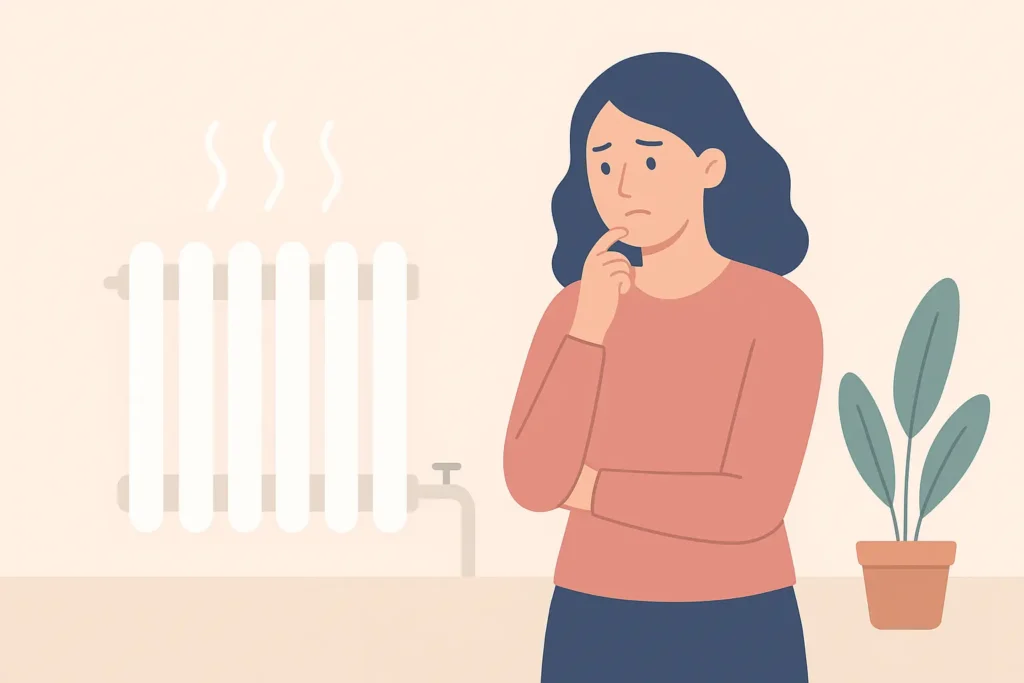
What Causes Radiators to Be Cold at the Bottom?
When a radiator is cold at the bottom but warm at the top, nine times out of ten the issue is sludge. That’s the everyday word we use for a build-up of rust, dirt and debris inside your heating system.
Sludge Build-Up
Your heating system is full of water. Over time the inside of your radiators and pipework can corrode slightly, particularly in older systems. That creates tiny particles of rust. Mix that with general debris and you get a thick, muddy substance that settles at the lowest point which is the bottom of your radiators.
Because hot water enters and flows through the radiator, it can still heat the top section. But if the bottom is full of sludge, the heat can’t circulate properly. The result is a radiator that feels hot on top and cold underneath.
I’ve seen this countless times in properties in High Wycombe and Great Missenden, especially in homes where the system hasn’t been flushed in years.
Trapped Air
If your radiator is cold at the top but warm at the bottom, that’s usually trapped air and can be fixed by bleeding the radiator. But it’s worth mentioning because people often confuse the two.
Air rises to the top, sludge sinks to the bottom. Knowing which bit is cold tells you a lot about the cause.
Poor System Maintenance
Another factor is a lack of inhibitor in the system. Inhibitor is a chemical that helps prevent internal corrosion. If it hasn’t been added after previous work or has become diluted over time, sludge can build up much faster.
In areas with older housing stock like Hazlemere, we often see heating systems that have been extended and altered over the years without a proper clean through.
How to Fix the Problem
The right fix depends on how bad the build-up is. Here are the usual steps we talk customers through.
1. Check and Bleed the Radiator
Even if the bottom is cold, it’s still worth bleeding the radiator first just to rule out trapped air.
- Turn the heating off
- Use a radiator key to slowly open the bleed valve
- Let the air hiss out until water appears
- Tighten it back up
Afterwards, check your boiler pressure and top it up if needed. If this doesn’t change anything and the bottom is still cold, sludge is the likely culprit.
2. Chemical Flush
For mild to moderate sludge, a chemical flush can help. This involves adding a cleaning solution to the system, running the heating so it circulates and then draining and refilling.
It’s less aggressive than a full powerflush and can be effective if the problem has been caught early.
3. Powerflush
If several radiators are cold at the bottom, or you’re noticing noisy pipework and slow warm-up times, a powerflush may be needed.
This uses a specialist machine to push cleaning chemicals through the system at high velocity, dislodging stubborn sludge and clearing blockages. The water that comes out at the start can be almost black in some systems I’ve worked on.
Once completed, fresh inhibitor is added to protect the system going forward.
4. Balancing the Radiators
Sometimes the issue isn’t sludge but poor flow. If your radiators haven’t been balanced correctly, some may heat better than others.
Balancing involves adjusting the lockshield valves so heat is distributed evenly throughout the house. It’s a bit of a patient job and often overlooked, but it can make a noticeable difference.
When to Call a Professional Heating Engineer
If you’ve bled the radiator and the bottom is still cold, or if multiple radiators are affected, it’s time to get it checked properly.
Other signs you shouldn’t ignore include:
- Your boiler keeps cutting out
- Banging or gurgling noises from the system
- Radiators taking a very long time to heat up
- Cold patches in several rooms
Left untreated, sludge can reduce efficiency and put extra strain on your boiler. I’ve seen perfectly good boilers fail early because they’ve been working against blocked pipework for years.
A heating engineer can test the system water, check circulation and advise whether a flush, replacement radiator or further investigation is needed. It’s always better to deal with it before winter really sets in.
Final Thoughts
A radiator that’s cold at the bottom is usually a sign of sludge build-up rather than a major fault. In many cases, the solution is straightforward once you know what you’re dealing with.
If you’re unsure or the problem keeps coming back, getting proper advice can save you money and hassle in the long run. For homeowners across Buckinghamshire, Chiltern Plumbing and Heating regularly help diagnose and resolve these kinds of issues quickly and sensibly.
Need expert help with your radiators? Contact us today and we’ll be happy to take a look and point you in the right direction.